September 16, 2026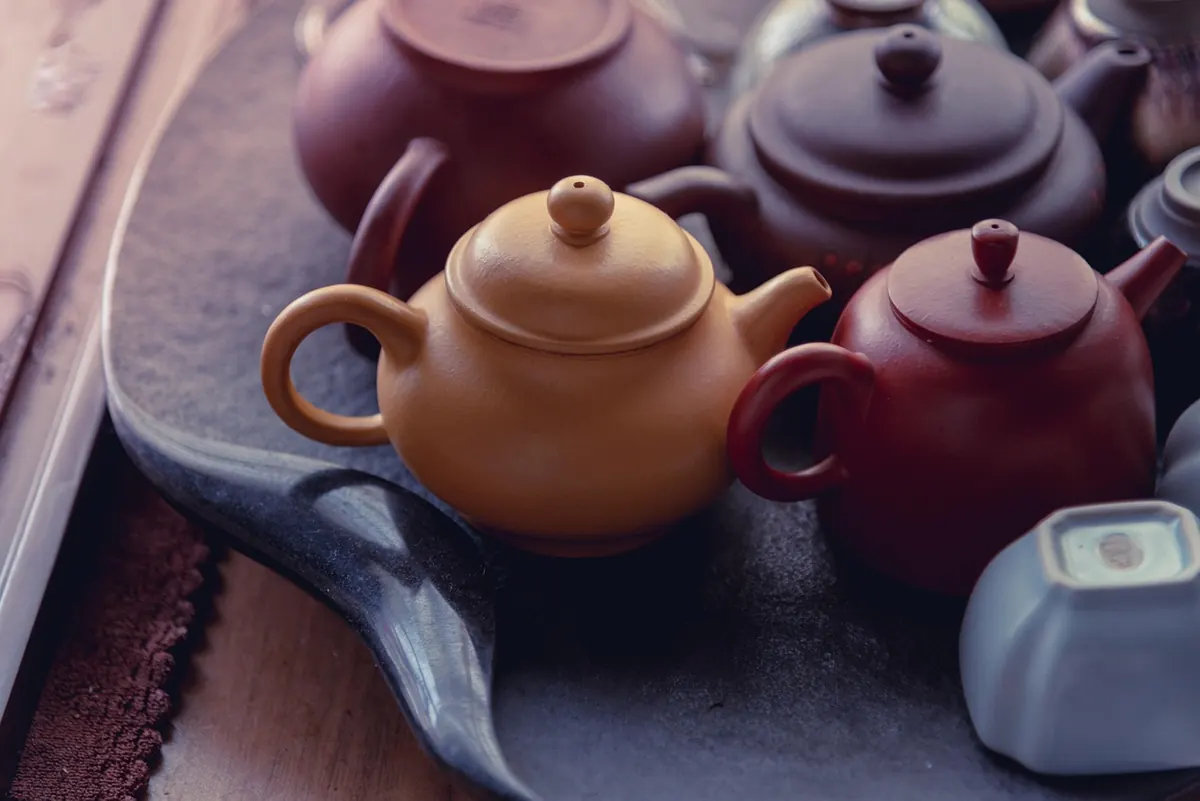
A teapot's capacity is printed in millilitres, but we drink in cups, and those two units rarely agree. A pot advertised as "four cups" can swamp two mugs, while a 500ml model might quietly carry three people through a long afternoon. What follows is the arithmetic nobody puts on the box: how much a pot really pours, how far it stretches across refills, and which size suits the table you actually set.
Millilitres are honest, cups are not
Cup size swings wildly depending on where you are and what you're drinking from. A small gongfu cup holds around 60–80ml. A Chinese or Japanese teacup sits near 120–150ml. A Western teacup runs about 150–180ml, a standard mug 250–350ml, and a big breakfast mug can pass 400ml without trying.
That means a pot labelled "4 cups" could be describing anything from 320ml to well over a litre. The millilitre figure, by contrast, is at least consistent. So ignore the cup count on the box and do one small job instead: measure your favourite cup once by filling it and pouring the water into a measuring jug. Write the number somewhere you'll see it. From then on, every teapot listing becomes instantly readable.
The fill line: why a 500ml pot never pours 500ml
Nominal capacity is measured to the rim. Nobody brews to the rim, and for good reasons:
- Leaves need room to unfurl, and a generous spoonful of oolong or rolled green tea can occupy 50–100ml of space once it opens.
- You stop an inch or two below the lip, otherwise the first pour slops over the side and the second one burns your hand.
- The spout's inner opening usually sits below the rim, so the pot stops pouring before it's anywhere near empty.
- A little liquid always stays behind, soaked into the leaves and pooled at the base.
In practice, a pot gives you roughly 75–85% of its printed volume as drinkable tea. Use 80% as your working number unless you pack the leaf in hard. Gongfu-style brewing with a nearly full pot of leaves can drop you to 60%.
If you remember one number from this article, remember 80 percent. Printed capacity times 0.8 gets you close enough for any kitchen decision.
Cup counts for 500ml, 800ml and 1L pots
500ml
About 400ml of usable tea. That's two generous 200ml mugs, or three 130ml teacups, or four small cups if you're pouring modestly. This is the sweet spot for one dedicated drinker working through refills, or two people who each want a proper cup with a top-up.
800ml
Roughly 650ml in the cup. Four 150ml teacups, two large 300ml mugs, or six small 100ml cups. This is the size that quietly handles a table of four without you jumping up to refill every few minutes.
1 litre
Around 800ml of actual tea. Five or six teacups, three mugs, or eight small cups at a squeeze. Good when everyone arrives at once, but be honest about the pouring: a full litre pot is heavy and unwieldy over a crowded table.
For completeness, a 350ml pot gives you about 280ml, which is a solo cup and a half. Fine for one person, frustrating for two.
Refill math: what a session really pours
A pot isn't a single serving. With whole-leaf tea you'll usually get a second infusion that's nearly as good as the first, and a third that's noticeably lighter. Volumes shrink slightly each time because the leaves hold more back.
Take a 500ml pot. First pour: about 400ml. Second: about 380ml. Third: about 350ml. That's over a litre from one pot, though the flavour fades as you go. Plan on two solid infusions and treat the third as a bonus rather than a promise.
Tea bags behave differently. Most give one good infusion and a thin second. And when you're catering, assume 10–20% of what you pour never gets drunk: half-finished cups, tea that goes cold while people talk. If five people each want two cups, pour as though six or seven people are drinking.
How many guests each size comfortably serves
- One person, slow sipping: 350–500ml, topped up once.
- Two people: 500–600ml, with one refill each.
- Three to four people: 700–800ml, or a 500ml pot refilled twice.
- Five to six people: a 1L pot, or two 500ml pots poured in rotation.
- Seven or more: two pots running at once, or brew in batches and keep a thermos nearby.
Two smaller pots often beat one enormous one. Tea stays hotter, the leaves don't stew, and you can offer a black tea alongside a green without either going bitter in the corner of the room.
Shape and weight matter as much as volume
A litre of water weighs a kilogram before you add the ceramic, so a full 1L pot can tip the scales near 1.5kg. Lifting that one-handed over a table of guests is how teacups get knocked over. If you regularly serve a crowd, two 600ml pots are easier to live with than one 1.2L monster.
Shape affects usable volume too. Wide, shallow pots swallow more leaf but pour more predictably; tall narrow pots hold heat well but are awkward to rinse. And a spout set low on the body means the pot stops pouring while there's still tea inside.
Measure your own pot in two minutes
- Fill the pot to the level you'd genuinely brew at, leaves included if you want the honest answer.
- Pour through a strainer into a measuring jug.
- No jug? Weigh the water instead. One gram equals one millilitre.
- Divide that total by your cup's volume.
- Round down. That's your real serving count, not the one on the label.
Choose for the ordinary Tuesday
Buy for the occasion that happens most, not the party that happens twice a year. In most homes that means something between 500ml and 700ml: enough for two or three people, light enough to pour, and small enough that a solo cup of tea doesn't mean reheating the leftovers. If you host often, add an 800ml pot rather than replacing the one you like. If you drink alone, resist the big pot entirely and put the money into better leaves.
Two medium pots, a strainer and cups you've actually measured will serve you better than any single oversized vessel. The right size is simply the one you reach for without thinking about it.
Photo: ERICKZHOU / Pixabay