October 09, 2026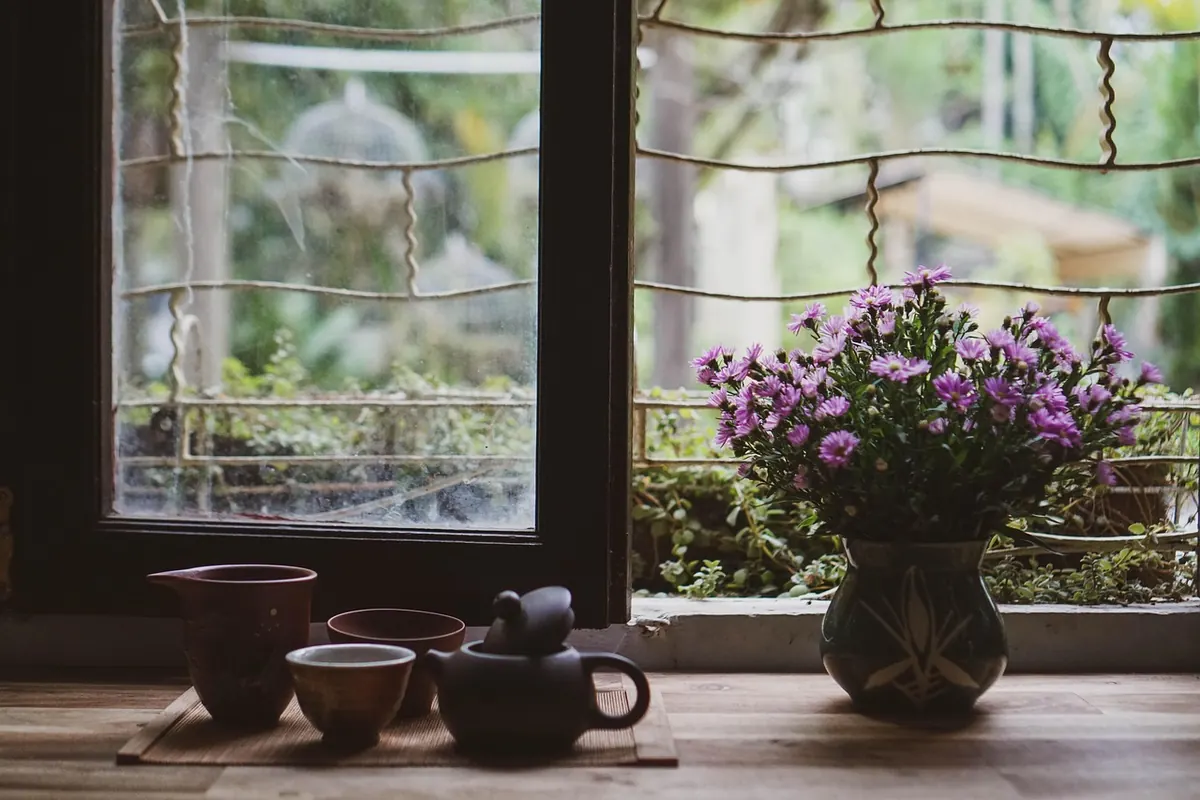
Most of us start with tea bags. They're tidy, predictable, and stocked in every grocery store. Then someone hands you a cup brewed from a tin, and the tea you've drunk for years suddenly tastes rounder, sweeter, less like wet paper. You start wondering what you've been giving up.
The honest answer: bags aren't a scam, and loose leaf isn't automatically better. They solve different problems. What actually separates them comes down to three things — what's inside the bag, how much room the leaf gets, and what you pay per drinkable cup.
What's Actually Inside the Bag
Most supermarket bags hold fannings or dust: the small broken pieces left after whole leaves are sorted out for loose-leaf sales. Broken leaf has far more surface area exposed to water, which is exactly why a bag turns your mug dark in two or three minutes. Fast extraction is genuinely useful when you want a strong, familiar cup with almost no effort.
It also flattens the cup. The brisk, drying, tannic side of tea arrives quickly, while the aromatics and softer sweetness that make a tea interesting need more time and more intact leaf. With dust, by the time the liquor has enough body, it's already heading toward bitter. Whole leaf moves on a gentler curve: light at one minute, sweet in the middle, still pleasant at four or five.
Grade varies wildly in both camps. Cheap bags are dust. Good bags — roomy pyramid sachets, or paper bags filled with whole leaf — are real tea in a convenient wrapper. Loose leaf ranges from bulk broken-grade sold by the scoop to carefully sorted whole leaves. The real divide isn't bag versus loose. It's dust versus leaf.
Room to Expand
A whole tea leaf needs space and moving water. Drop a teaspoon of balled oolong into a mug with a mesh basket and watch it unfurl — it can swell to several times its dry size. In a sealed, flat paper bag, the leaf is packed tight and the water inside barely circulates. You're not steeping tea so much as steeping a compressed puck of it.
That's why the same tea often tastes both stronger and thinner from a bag: more color, more astringency, less texture. If you're staying with bags, choose pyramid or roomier sachets when you can, give the bag a gentle stir, and skip the nervous squeeze against the side of the mug. Squeezing pushes out the harshest stuff first.
A two-minute comparison worth doing once
Take a tea you already drink bagged and buy a loose-leaf version of the same type. Measure roughly the same amount into a basket — about two grams, or a rounded teaspoon of most loose leaf — and brew both in identical mugs, same water, same three minutes. Taste side by side, no milk, no sugar. Whatever you conclude from that cup is more useful than anything you'll read about it.
Price Per Cup: Run the Numbers on Your Own Shelf
A tin of loose leaf usually costs more than a box of bags, and that's where most people stop comparing. Per cup, the picture often flips — but not always. The only way to know is to do the arithmetic with your own tea.
- Find the total weight of the tea you bought, in grams.
- Decide your grams per cup. A typical bag holds around two grams; a teaspoon of loose leaf is roughly two to three grams, and large leaves weigh less per spoon than fine ones.
- Divide total grams by grams per cup to get the cups in the package.
- Count re-steeps. Whole-leaf oolong, many green teas, and pu'er often give two or three good infusions from the same leaves. Dust gives one, and a weak second if you're stubborn.
- Divide the price by the number of good cups. Ignore everything else.
Two things throw this off in practice. Weak cups you pour down the sink aren't free — they count against what you paid. And individually wrapped bags carry packaging costs you're covering whether or not you value the wrapper.
The verdict is rarely absolute. Loose leaf wins on cost when it's a mid-priced everyday tea you re-steep, and loses badly when it's a small tin of something rare. Premium bags can beat cheap loose leaf outright.
Where Bags Genuinely Win
- Speed with no gear. No basket, no strainer, no leaves in the sink.
- Consistency. Each bag is pre-measured, so a distracted brew still lands close to the target.
- Travel and offices. Airports, hotel kettles, campsites, and desk drawers all favor a bag.
- Milk-heavy drinks. Masala chai, breakfast blends, and anything headed for milk and honey lose very little in a bag.
- Pitchers and iced tea. Dropping six bags into a jug beats measuring six servings of leaf.
- The default cup. Tea you drink while half-reading email doesn't need ceremony.
None of this is a consolation prize. If your tea mostly exists to warm your hands at three in the afternoon, a bag is a rational choice, and no amount of leaf-grade snobbery changes that.
When Loose Leaf Earns the Extra Step
Loose leaf starts paying you back when the tea is the point rather than the backdrop — green, white, and oolong teas, single-origin blacks, aged teas, anything where nuance is why you bought it. It also matters if you drink three or more cups a day, since that's when control over strength and repeat infusions starts to pay off.
The gear bar is lower than people expect. An infuser basket in a mug, or a small teapot with a built-in strainer, handles almost everything. You don't need a scale at first; a rounded teaspoon per cup is a fine starting point. What matters more than equipment is three habits: use enough leaf, keep water below a rolling boil for green and white teas, and pull the leaves before they turn bitter rather than after.
How to Decide Without Overthinking It
Buy one loose-leaf version of a tea you already drink from a bag. Brew them side by side once. If the difference doesn't move you, keep your bags and spend the money elsewhere — that's a real answer, not a failure. If it does, keep both: bags for travel, the office, and the mug you drink while doing something else; loose leaf for the cup you actually sit down with.
Store whichever you choose in an airtight tin, away from light and away from spices. Tea takes on whatever sits next to it, and loose leaf left open above the stove will taste like the stove. Buy amounts you'll finish within a few months, then replace them. Fresh, well-kept tea matters more than the format it arrives in.
Photo: Layenday / Pixabay